Is Air Pollution Lowering Your Child’s IQ?
By Priyambda Sahay
Reviewed by : Ujala Cygnus
February 28, 2026
Air pollution has become a serious public health problem in India. While it has long been linked to respiratory, lung, and heart diseases, emerging medical research suggests that air pollution may also negatively impact children’s mental development and IQ (Intelligence Quotient) levels. This is especially concerning in a country like India, which has a large child population and is undergoing rapid urbanisation.
Air pollution includes harmful substances such as PM2.5, PM10, nitrogen dioxide, sulfur dioxide, and ozone. These fine particles are so small that they can enter the body through the respiratory system and reach the bloodstream and even the brain. The impact of these pollutants is more severe in children than in adults.
Air Pollution and Children’s Brain Development
According to respiratory and neurological research, tiny pollutant particles can cause inflammation in the brain (neuroinflammation). This may slow brain development and interfere with neuronal communication, affecting learning ability, memory, and decision-making skills. Additionally, exposure to polluted air during pregnancy can adversely affect a child’s mental development.
An international study published in The Lancet Planetary Health reported that children living in highly polluted areas exhibited poorer cognitive function and lower average IQ scores. In the Indian context, research conducted by the Indian Council of Medical Research (ICMR) and All India Institute of Medical Sciences (AIIMS) found that long-term exposure to PM2.5 may lead to attention deficits, memory impairment, and learning difficulties in children.
In a 2025 report, the European Environment Agency highlighted the link between air pollution and mental health conditions. The report suggests that pollution may contribute to depression, impaired cognitive function, anxiety, and even increased risks of self-harm and suicide. Developing brains of children and adolescents are particularly sensitive to environmental pollutants.
According to the World Health Organization (WHO), air pollution is responsible for millions of premature deaths globally each year, including over 2 million deaths annually in India. The number of deaths attributed to air pollution in the country has increased significantly over the past 30 years.
Who Is Most at Risk?
Air pollution has the greatest impact on infants, children, elderly individuals, outdoor workers, and those already suffering from asthma, bronchitis, allergies, or other respiratory diseases. Anyone experiencing breathing difficulties or worsening respiratory symptoms should consult a doctor immediately. Medications, inhalers (pumps), or rotacaps should be used strictly as prescribed.
To understand this issue better, we spoke with Dr. Deepak Sharma, Pulmonologist at Ujala Cygnus Brightstar Hospital, Moradabad. He answered several important questions about the health impacts of air pollution.
How does air pollution affect our health?
Air pollution is increasing significantly and affects health in multiple ways. It primarily causes respiratory problems. Children who develop respiratory issues early in life may continue to face them as they grow older. Common symptoms include itchy eyes, throat and nose irritation, chest heaviness, difficulty breathing, chronic cough, and asthma.
Several occupational and epidemiological studies show that air pollution increases the risk of heart attack, stroke, and lung cancer. It is also associated with neurological issues such as depression, anxiety, dizziness, and reduced concentration.
Does it affect children's lungs and immunity?
Although air pollution affects people of all age groups, children are particularly vulnerable. Pollution can reduce lung capacity and make children more susceptible to heart and respiratory diseases at an early age. Conditions such as asthma, bronchitis, and pneumonia are strongly linked to polluted environments. It may also impact overall physical development.
Does air pollution affect children’s mental health?
Yes, air pollution can significantly affect children’s mental health. Several global studies suggest that children living in highly polluted urban areas tend to have lower cognitive performance compared to those in cleaner environments. This can negatively affect their behavioral and mental development.
Does wearing a mask protect against air pollution?
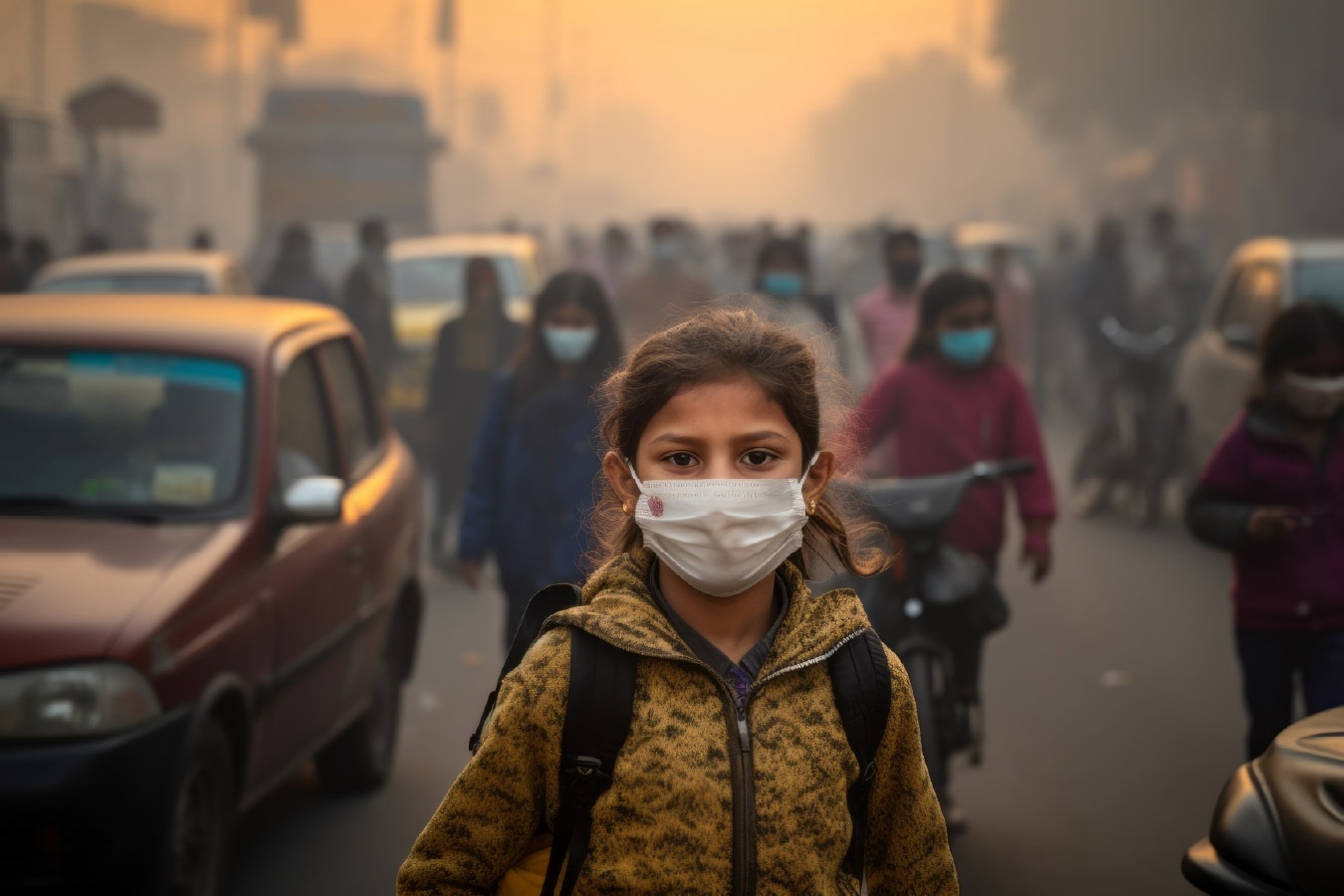
Yes, wearing a mask can help reduce exposure to polluted air. Whenever stepping outside, especially during high pollution levels, wearing a mask is advisable. Options include simple face masks, N95 masks, and masks with HEPA (High Efficiency Particulate Air) filtration.
While many people prefer simple masks, N95 masks offer better protection, particularly during winter months when smog levels are high.
Is air pollution contributing to rising mortality in India?
India, ranked among the most polluted countries in the world, experiences millions of premature deaths every year due to air pollution. It significantly increases the risk of heart attack, stroke, lung cancer, and chronic respiratory diseases.
Studies also show that pregnant women exposed to high pollution levels face increased risks of miscarriage, stillbirth, and low birth weight. Pollution has additionally been linked to neurological symptoms such as irritability, depression, anxiety, dizziness, and attention deficits.
Can diet and lifestyle changes help?
A balanced diet and healthy lifestyle can help strengthen immunity and reduce the impact of pollution-related inflammation. Choosing plant-based foods rich in antioxidants—such as amla, turmeric, and broccoli—may help reduce inflammation and support immune function. However, dietary changes alone cannot eliminate the effects of air pollution. Reducing exposure remains the most important preventive measure.
Are air purifiers effective? Do they affect immunity?
Air purifiers equipped with HEPA filters can significantly reduce indoor air pollution by filtering up to 99% of fine particles. Using an air purifier at night, and during the day, if possible, can help improve indoor air quality.
There is no scientific evidence that air purifiers weaken immunity. This belief is a myth. People of all age groups can safely use them.
FAQ
Can N95 masks be reused?
N95 masks can be reused a limited number of times if handled properly and kept dry. However, they should be replaced once they become damaged, moist, or difficult to breathe through. They are not designed for long-term repeated use over months.
What type of air purifier should you buy?
Choose an air purifier with a HEPA filter and an activated carbon filter. Ensure it does not emit ozone. HEPA filters effectively remove fine particles, while carbon filters help reduce odors and gases.
Is there a vaccine to protect against air pollution?
There is no vaccine that protects against air pollution. However, individuals with existing respiratory conditions should consult their doctor regarding pneumonia and flu vaccinations, as pollution can increase the risk of lung infections.
How can we help control air pollution?
Promote the use of natural gas and biofuels
Use clean fuels for cooking and transportation
Reduce vehicle emissions
Support renewable energy
Plant and protect trees
If you have questions about air pollution and its health effects, consult a doctor at your nearest Ujala Cygnus Hospital or email askadoctor@ujalacygnus.com to connect with our health experts. Click here to book an appointment with Dr. Deepak Sharma
Loading...