
Obesity: More Than Just Weight Gain
Obesity is one of the most common health challenges affecting people worldwide today. It occurs when excessive body fat accumulates in the body, increasing the risk of several serious health problems. While many people consider obesity only a weight issue , it is a complex medical condition that can impact both physical and mental health. Factors such as unhealthy eating habits, lack of physical activity, genetics, stress, and certain medical conditions can all contribute to weight gain.However, it is preventable and manageable with the right lifestyle choices and medical guidance. Adopting healthier eating habits, staying physically active, managing stress, and seeking timely medical advice can help individuals achieve healthier weight and improve their overall quality of life. According to the World Health Organization (WHO), obesity is defined as an abnormal or excessive fat accumulation that presents a risk to health. The commonly used metric to classify obesity is Body Mass Index (BMI), where a BMI of 25 or above is considered overweight, and a BMI of 30 or above is classified as obese. In India, a person is considered overweight if their Body Mass Index (BMI) is between 23.0 and 24.9 kg/m², and obese if their BMI is 25 kg/m² or higher. Morbid obesityoccurs when a person’s BMI is 35 or more.Obesity is a pressing public health challenge in India as well as globally. It is a major contributor to several serious health conditions and increased mortality. The prevalence of overweight and obesity have been rising steadily among both adults and childrenworldwide, making it a growing concernfor healthcare systems.
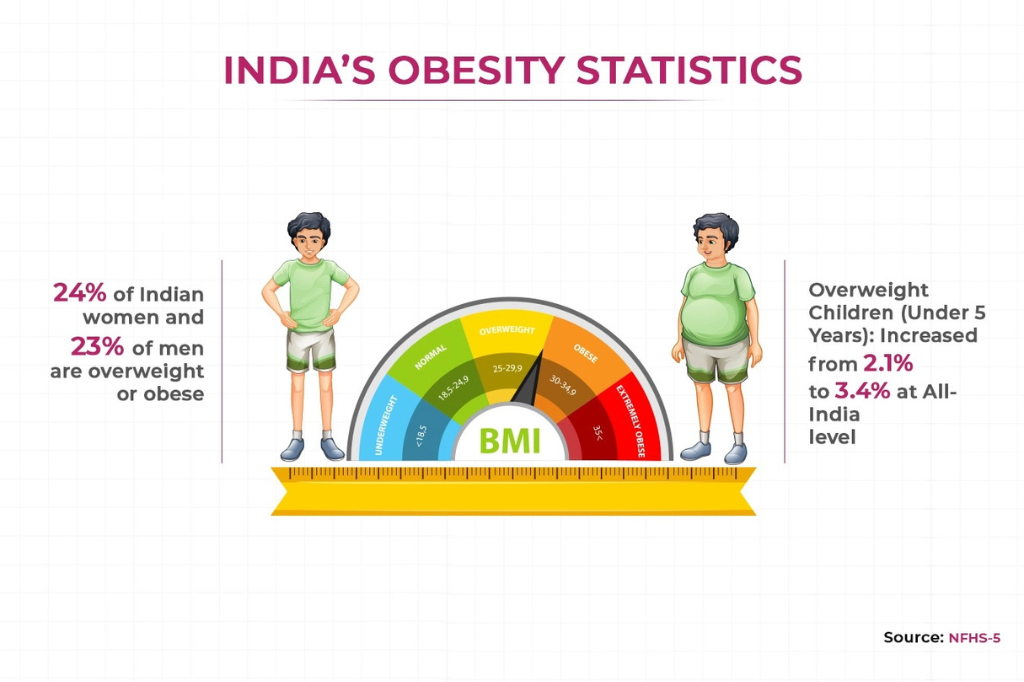
As per the National Family Health Survey (NFHS)-5 (2019-21), overall, 24% of Indian women and 23% of Indian men
are overweight or obese. There has also been an increase in the percentage of children under 5 years who are overweight
(weight-for-height) from 2.1 percentinNFHS-4 (2015-16) to 3.4 percent in NFHS-5 (2019-21)at All-India level.
In this context,Lt. Col. Dr. Inderpal Singh at Ujala Cygnus Rainbow Hospital, Agra,has addressed several important questions related to obesity, offering valuable insights for patients.
Is obesity only caused by overeating?
No, overeating is only one factor. Obesity is multifactorial disease. Important factors include:
1. Diet, High calorie foods, sugary drinks, fast food
2. Lack of physical activities, Sedentary lifestyle, long screen time
3. Hormonal problems
4. Hypothyroidism, Cushing’s syndrome, insulin resistance
5. Steroids, antidepressants, antipsychotics
6. Sleep and stress, Poor sleep increases hunger hormones. Stress leads to emotional eating.
7. Environment Easy availability of unhealthy foods, urban sedentary lifestyle. So, obesity is not simply a lack of willpower.
What role does genetics play?
Fat genes. Genetics can play a significant role, but it does not completely determine weight. Research shows 40 to 70 percent of obesity risk may be genetic. Certain genes affect appetite, metabolism, fat storage, and satiety signals. One well-known gene is the FTO gene, associated with higher obesity risk. However, genes load the gun, lifestyle pulls the trigger.
Even people with obesity-related genes can maintain healthy weight with proper diet, physical activity, and healthy habits.
What are the side effects of obesity?
Obesity affects almost every organ system.
1. Cardiovascular problems, heart disease, high blood pressure, stroke, high cholesterol.
2. Metabolic diseases, type 2 diabetes, metabolic syndrome, fatty liver disease.
3. Respiratory problems, sleep apnea, breathing difficulty, joint problems, osteoarthritis, back pain, and knee damage.
4. Reproductive problems, infertility, PCOS in women, erectile dysfunction in women.
5. Cancer risk, high risk of breast cancer, colon cancer, and endometrial cancer.
6. Reduce life expectancy, severe obesity can reduce lifespan by 5-10 years.
Does obesity affect a child’s mental growth?
Yes, childhood obesity can affect both psychological health and cognitive development. Psychological effects Children with obesity may experience low self-esteem, social isolation, bullying at school, anxiety, and depression. These issues can significantly affect confidence, personality development, and learning effects. Some studies show it is associated with reduced attention span, memory problems, and poor academic performance. The Possible reasons include inflammation affecting the brain, sleep problems, poor diet affecting brain development. Long-term impact- Obese children are more likely to become obese and develop chronic disease earlier in life.
When is a person considered obese?
Doctors usually classify weight using body mass index which is called BMI. BMI is equal to weight in kg divided by height square. Height is taken in meters.
BMI categories as per WHO standards. Below 18.5 is considered as underweight. 18.5 to 24.9 is considered normal weight. 25 to 29.9 is considered overweight And BMI 30 or above is considered obese. So, a person moves from overweight to obese when BMI reaches 30 or more. Doctors may also consider waist circumference, body fat percentage, associated with disease like diabetes and hypertension. For Asian populations including Indians, risk may start at slightly lower BMI levels.
If you have questions related to obesity, consult a doctor at your nearest Ujala Cygnus Hospital oremail askadoctor@ujalacygnus.com. to connect with our health experts.Click hereto book an appointment with Lt Col Dr Inderpal Singh .
Frequently asked questions (FAQs)
What is obesity?
Obesity is a medical condition in which a person has excessive body fat that increases the risk of various health problems. It is commonly assessed using body mass index (BMI), a measure based on height and weight. A BMI of 30 or higher is considered obese.
How is obesity measured?
Doctors usually measure obesity using Body Mass Index (BMI), which is calculated from a person’s height and weight. They may also measure waist circumference, body fat percentage, and overall health conditions to assess obesity.
What health problems are linked to obesity?
Obesity can increase the risk of many health conditions such as heart disease, type 2 diabetes, high blood pressure, joint pain, and osteoarthritis, sleep apnea, fatty liver disease, certain types of cancer etc
How can someone lose weight safely?
Safe weight loss involves healthy eating, regular physical activity, portion control, and lifestyle changes. Doctors may also recommend nutrition counseling, medications, or bariatric surgery in certain cases.
When should someone consult a doctor about obesity?
A person should consult a doctor if they have a BMI above 30, unexplained weight gain, difficulty losing weight, or obesity-related health problems like diabetes or high blood pressure.






+91-91466 91466
If you want to get a free consultation without any obligations, fill in the form below and we'll get in touch with you.
Request a Call Back
Our healthcare expert will contact you shortly to understand your requirements and assist you with the right care.
100% Confidential
Your information is safe and secure with us.
Quick Response
Our team will connect with you at the earliest.
Expert Guidance
Speak with our experienced healthcare professionals.
Request a Call Back
You Will Get a call within 1 hour
?? Your information is
safe & confidential.