Kidney Stones: Know the Warning Signs Before They Become a Bigger Problem
By Priyambda Sahay
Reviewed by : Ujala Cygnus
August 21, 2026
Kidney stones are becoming increasingly common, affecting people across all age groups, including young adults. Changes in lifestyle, inadequate water intake, dietary habits, rising temperatures, and metabolic disorders have contributed to a significant increase in the incidence of renal stones in recent years.
While many people associate kidney stones with severe pain, not every stone causes symptoms immediately. Some remain silent for months before leading to serious complications such as urinary obstruction, infection, or kidney damage. This is why awareness, timely diagnosis, and appropriate treatment are essential.
According to Dr. Laxmikant Sharma, Urologist, Ujala Cygnus Rainbow Hospital Agra “kidney stones are a common but highly treatable condition. Advances in urological care have made treatment safer, less invasive, and more effective than ever before. The key lies in recognising symptoms early, seeking timely medical advice, and adopting healthy lifestyle habits to prevent recurrence. Staying well hydrated, maintaining a balanced diet, and undergoing regular health check-ups can go a long way in protecting your kidneys.”
Dr. Laxmikant Sharma, answers important questions about kidney stones and shares valuable insights on recognising the symptoms, understanding the causes, and taking the right preventive measures.
What are kidney stones, and how are they formed?
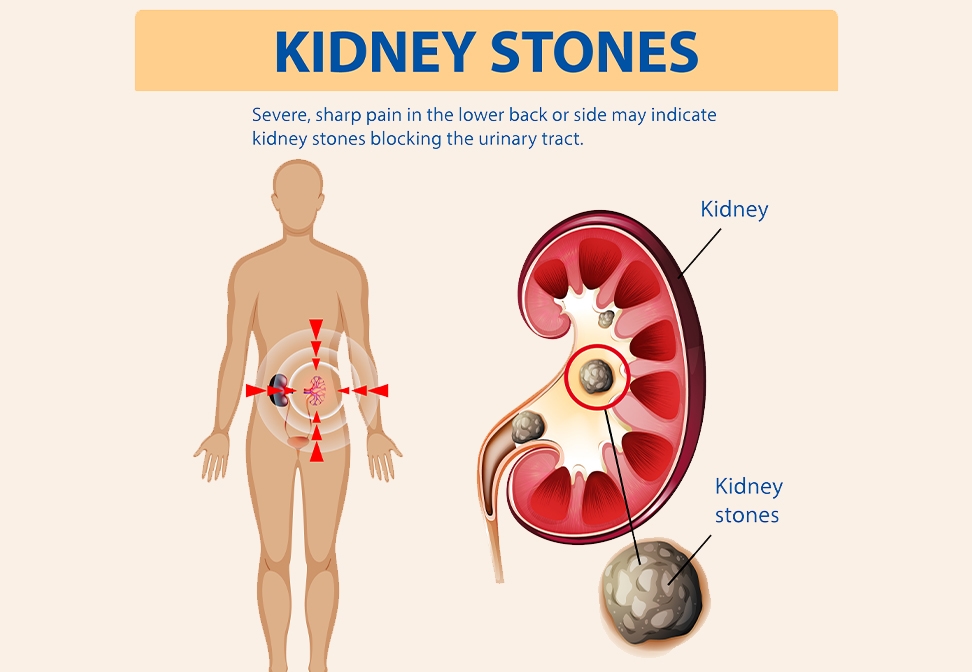
Kidney stones, also known as renal calculi, are hard deposits formed from minerals and salts that crystallize within the kidneys. They vary in size—from tiny, sand-like particles that pass naturally to larger stones that require medical intervention.
The most common types of kidney stones include:
Calcium stones (the most common)
Uric acid stones
Struvite stones
Cystine stones
Each type has different causes, making proper evaluation important for preventing recurrence.
The stone may stay in the kidney or travel down the urinary tract into the ureter. Sometimes, tiny stones move through the body in the urine without causing too much pain. But stones that don't move may cause a back-up of urine in the kidney, ureter, the bladder or the urethra. This is what causes the pain.
What are the common symptoms of kidney stones?
One of the hallmark symptoms of kidney stones is sudden, severe pain in the back or side that may radiate toward the lower abdomen or groin. The pain can come in waves and may be accompanied by burning sensation while passing urine, blood in the urine, frequent urination, nausea, vomiting, fever and chills(if infection is present) and difficulty passing urine. Some small stones may cause no symptoms. However, small stones may produce no symptoms at all and are often discovered during routine health check-ups.
Can kidney stones damage the kidneys if left untreated?
Ignoring kidney stone symptoms can have serious consequences. A stone blocking the urinary tract can cause swelling of the kidney, repeated urinary tract infections, severe pain, and, in prolonged cases, permanent loss of kidney function.
Fortunately, modern diagnostic tools make early detection easier than ever. Investigations may include:
Ultrasound of the kidneys and urinary tract
CT scan (especially for small or complex stones)
Urine examination
Blood tests to assess kidney function and identify metabolic abnormalities
Early diagnosis allows treatment before complications develop.
What treatments are available for kidney stones?
Treatment depends on the stone's size, location and the patient's overall health. Small stones may pass naturally with adequate fluids and medicines under medical supervision. Larger or obstructive stones may require procedures such as-
Extracorporeal Shock Wave Lithotripsy (ESWL): Uses shock waves to break stones into smaller fragments that pass naturally.
Ureteroscopy (URS): A thin telescope is passed through the urinary passage to remove or fragment stones using laser technology.
Retrograde Intrarenal Surgery (RIRS): A flexible scope reaches the kidney through the urinary tract, allowing precise laser treatment without external incisions.
Percutaneous Nephrolithotomy (PCNL): Recommended for large or complex kidney stones through a small incision in the back.
These minimally invasive techniques offer faster recovery, reduced pain, shorter hospital stays, and excellent success rates.
How can kidney stones be prevented?
The encouraging news is that many kidney stones are preventable.
Simple lifestyle modifications can significantly reduce the risk:
Drink 2.5–3 litres of water daily, or more in hot weather.
Limit excessive salt intake.
Eat a balanced diet rich in fruits and vegetables.
Avoid excessive consumption of processed foods and sugary beverages.
Maintain a healthy body weight.
Moderate intake of animal protein is advised by your doctor.
Do not ignore recurrent urinary infections.
Undergo metabolic evaluation if you have repeated stone formation.
People who have had one kidney stone are at a higher risk of developing another, making preventive care especially important.
When Should You See a Urologist?
Consult a urologist immediately if you experience:
Prompt evaluation can prevent complications and preserve kidney function.
If you have any question please contact your nearest Ujala Cygnus Hospital. You can also reach out to our health experts at askadoctor@ujalacygnus.com or click here to book an appointment with Dr. Laxmikant Sharma
FAQ
Can kidney stones occur even if I drink enough water?
Yes, Adequate hydration significantly lowers the risk, but it does not completely prevent kidney stones. Genetics, family history, high salt or animal-protein intake, certain medical conditions, medications, and abnormalities in urine composition can also contribute to stone formation.
Is it safe to wait for a kidney stone to pass on its own?
It depends on the stone’s size, location, and the patient’s symptoms and overall health. Very small stones may pass naturally, but a stone causing persistent pain, urinary obstruction, infection, or reduced kidney function requires prompt medical evaluation. Waiting without medical advice can sometimes lead to complications.
Can kidney stones come back after treatment?
Yes, removing a kidney stone does not always eliminate the factors responsible for its formation. People who have had stones previously may develop them again. Identifying the type of stone and, when appropriate, undergoing a metabolic evaluation can help determine measures to reduce the risk of recurrence.
Does drinking lemon water help prevent kidney stones?
Lemon and other citrus fruits contain citrate, a substance that can help reduce the formation of certain types of kidney stones. However, lemon water should not be considered a treatment for existing stones, and excessive consumption of sugary citrus drinks should be avoided. People with recurrent stones should discuss dietary changes with their doctor.
Can kidney stones affect men and women differently?
Kidney stones can affect both men and women, although the risk can vary depending on age, lifestyle, metabolic conditions, diet, and other factors. Symptoms and complications can also differ from person to person, so persistent urinary symptoms should be medically evaluated rather than attributed to stones without a proper diagnosis.
Can children and teenagers develop kidney stones?
Yes, although kidney stones are more common in adults, children and adolescents can also develop them. Dehydration, dietary factors, family history, metabolic disorders, and certain medical conditions may increase the risk. Recurrent stones in a child should be evaluated carefully to identify any underlying cause.
-----------
Loading...