Give anOrgan, Give Life.
Your decision today can bring hope, heal lives and create a brighter tomorrow.

Save Lives

Give Hope

Create Impact
Give the Gift of Life Through Organ Donation
Organ donation is one of the most meaningful acts of generosity, offering hope and a second chance at life to people living with end-stage organ failure. A single donor has the potential to save multiple lives and improve many more through the donation of organs and tissues.
At Ujala Cygnus Hospitals, we believe that every organ donated is a priceless gift. Through ethical medical practices, compassionate care and adherence to national transplant guidelines, we support patients and families throughout the organ donation and transplantation journey.

What is Organ Donation?
Organ donation is the voluntary process of donating healthy organs or tissues for transplantation into individuals suffering from irreversible organ failure or severe tissue damage. When medical treatments are no longer effective, transplantation often becomes the only life-saving option.
Organs donated by one individual can help restore health, independence and quality of life for several recipients. Depending on the type of donation, organs may be donated by a living person or by a deceased donor after brain death has been medically confirmed.
Organ donation is carried out under strict medical, ethical and legal regulations to ensure transparency, fairness and patient safety throughout the transplantation process. In India, organ donation is governed by the Transplantation of Human Organs and Tissues Act (THOTA), which regulates organ retrieval, allocation and transplantation. This aligns with the legal framework referenced in your source material while using updated wording and structure.
Why Organ Donation Matters
Every year, thousands of patients develop irreversible failure of vital organs such as the kidneys, liver, heart and lungs. For many of them, transplantation offers the best chance of survival and a significantly improved quality of life.
Unfortunately, the demand for donor organs continues to exceed the number available. Increasing awareness about organ donation can help reduce waiting times and save countless lives.
Organ donation can:
- Save multiple lives through life-saving organ transplantation
- Restore vision through corneal donation
- Improve mobility using donated bones, tendons and ligaments
- Help burn victims through skin grafts
- Give patients with chronic illnesses the opportunity to live healthier, more independent lives
One donor can potentially save up to eight lives and improve the lives of many others through tissue donation.

Living Organ Donation
Organ donation is broadly classified into two categories.
Living Organ Donation
Living organ donation occurs when a healthy individual voluntarily donates an organ or part of an organ while continuing to live a healthy life. Only organs that can function adequately after partial removal or where one healthy organ is sufficient are considered for living donation.
Living donation commonly includes:
- One kidney
- Part of the liver
- Part of the pancreas (in selected cases)
Deceased Organ Donation
Deceased organ donation takes place after a person has been declared brain dead in accordance with established medical and legal criteria. Although life-support machines may temporarily maintain circulation, brain death is irreversible and legally recognised as death.
Following consent from the family or prior authorisation by the donor, healthy organs and tissues are carefully retrieved by specialised transplant teams and allocated to suitable recipients through the national organ allocation system.
Who Can Become an Organ Donor?
Organ donation is a generous act that can make a life-changing difference to individuals waiting for a transplant. Most people can become organ or tissue donors, regardless of their age, gender, ethnicity or blood group. The suitability of organs for transplantation is determined by medical specialists at the time of donation based on the donor's health, medical history and the condition of the organs.
Many people assume they are too old or have existing medical conditions to donate. However, age alone does not prevent organ donation. Each potential donor is assessed individually, and the final decision is made by the transplant team after a thorough medical evaluation.
Living Organ Donors
Living donation may be suitable for healthy adults who wish to donate an organ or part of an organ to help another person. Before proceeding, potential donors undergo comprehensive medical, psychological and legal assessments to ensure that donation is safe, voluntary and in their best interests.
Deceased Organ Donors
Individuals who have suffered irreversible brain death may become organ donors, provided legal requirements are fulfilled and consent has been obtained in accordance with the applicable regulations. Tissue donation may also be possible after natural death, depending on the tissue being donated and the time elapsed since death.
Who Can Give Consent for Organ Donation?
Consent is one of the most important aspects of the organ donation process. Individuals who wish to donate their organs after death are encouraged to register their decision and, most importantly, discuss their wishes with their family members.
If a person has formally pledged to become an organ donor during their lifetime, this helps guide their family and healthcare professionals. However, in many situations, the family's support remains an essential part of the donation process.
Where no prior pledge has been made, consent for organ donation may be provided by the legally authorised next of kin or person responsible for the deceased, in accordance with the Transplantation of Human Organs and Tissues Act (THOTA) and other applicable regulations in India. This reflects the legal consent framework outlined in your reference document while using updated language.
For this reason, openly discussing your decision to become an organ donor with your loved ones is one of the most meaningful steps you can take.
Who Receives the Donated Organs?
Donated organs are allocated to patients on the transplant waiting list through a regulated and transparent allocation system. Allocation is never based on financial status, social background or personal relationships.
Instead, organs are matched using several important medical criteria, including:
- Blood group compatibility
- Tissue matching
- Medical urgency
- Severity of illness
- Waiting time
- Organ size compatibility
- Geographical considerations to preserve organ viability
The objective is to ensure that every donated organ is transplanted into the most suitable recipient, giving each patient the greatest possible chance of a successful outcome.
Organs That Can Be Donated
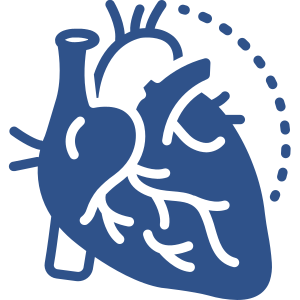
Heart
The heart is a vital organ responsible for pumping oxygen-rich blood throughout the body. Patients with advanced heart failure, severe cardiomyopathy or certain congenital heart diseases may benefit from a heart transplant when other treatments are no longer effective.
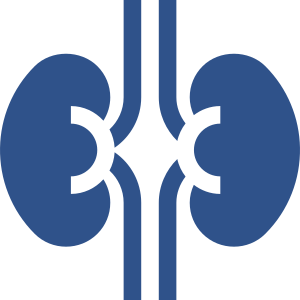
Kidneys
Kidney transplantation is one of the most commonly performed organ transplants worldwide. Individuals with chronic kidney disease or end-stage kidney failure may receive a healthy kidney from either a living or deceased donor, reducing or eliminating the need for long-term dialysis.
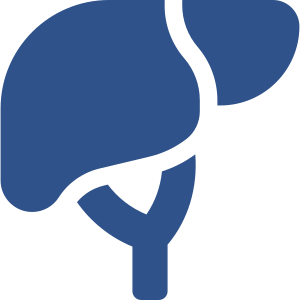
Liver
The liver performs hundreds of essential functions, including detoxification, metabolism and protein production. A liver transplant may be recommended for patients with advanced liver disease, liver cirrhosis, acute liver failure or certain liver cancers.
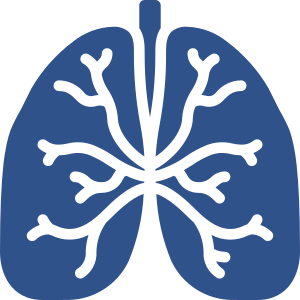
Lungs
One or both lungs may be transplanted in patients with severe lung diseases such as pulmonary fibrosis, chronic obstructive pulmonary disease (COPD), cystic fibrosis or pulmonary hypertension when medical treatment can no longer control the condition.

Pancreas
Pancreas transplantation may be considered for selected patients with Type 1 diabetes who experience severe complications or have poor blood sugar control despite optimal treatment. In some cases, a pancreas transplant may be performed alongside a kidney transplant.

Small Intestine
Although less common, intestinal transplantation may be performed for patients with irreversible intestinal failure who are unable to absorb nutrients adequately and cannot be maintained safely on long-term intravenous nutrition.
Tissues That Can Be Donated
Organ Donation Process
Frequently Asked Questions
Is There Any Cost to the Donor's Family?
No. Organ donation is a voluntary act of generosity. There is no cost to the donor’s family for the donation or retrieval of organs and tissues intended for transplantation.
What is the difference between an organ and a tissue?
An organ is a group of specialised tissues that work together to perform essential body functions, such as the heart, kidneys or liver. Tissues are collections of similar cells that support or connect different parts of the body, including corneas, skin, bones, tendons and heart valves.
Who is eligible to become an organ donor?
Most people can become organ donors regardless of their age, gender or ethnicity. Medical specialists assess each donor individually to determine whether their organs or tissues are suitable for transplantation.
Can I become an organ donor if I have an existing medical condition?
Yes. Having a medical condition does not automatically prevent organ donation. Healthcare professionals evaluate each case carefully to determine which organs or tissues, if any, are suitable for transplantation.
What happens after I register as an organ donor?
Registering your decision records your willingness to donate. It is also important to inform your family about your wishes so they understand and can support your decision if the situation arises.
Will organ donation affect my medical treatment?
No. Your medical team will always focus on providing the best possible treatment to save your life. Organ donation is only considered after all lifesaving measures have been exhausted and, where applicable, brain death has been formally confirmed.
Can organ failure be prevented?
While not all causes of organ failure can be prevented, adopting a healthy lifestyle can reduce the risk. Maintaining a balanced diet, exercising regularly, avoiding tobacco and excessive alcohol, managing chronic conditions such as diabetes and high blood pressure, and attending regular health check-ups can help protect your organs and support long-term health.
Which organs and tissues can be donated?
Several organs and tissues can be donated, depending on the donor’s medical suitability.
Heart, Kidneys, Liver, Lungs, Pancreas, Small intestine
Corneas, Skin, Bones, Heart valves, Tendons and ligaments, Blood vessels
Is there an age limit for organ donation?
There is no fixed upper age limit for organ donation. The condition and function of the organs are more important than the donor’s age. Every potential donor is assessed on an individual basis.
Can I donate organs while I am alive?
Yes. Living donation is possible for selected organs, such as one kidney or a portion of the liver. Living donors undergo thorough medical and psychological assessments to ensure that donation is safe for both the donor and the recipient.
Can I choose which organs or tissues I wish to donate?
Yes. When registering as an organ donor, you may be able to indicate whether you wish to donate all eligible organs and tissues or only specific ones, depending on the registration process.
How long do donated organs remain suitable for transplantation?
Each organ has a different preservation time. Once retrieved, transplant teams work quickly to transport and transplant the organ to the recipient, ensuring the best possible outcome.
How can I register as an organ donor?
You can register through authorised organ donation programmes or recognised government organisations. Informing your family about your decision is an important part of the registration process.