Advanced Arthroscopy Surgery at Ujala Cygnus Hospitals
At Ujala Cygnus Hospitals, we offer comprehensive arthroscopy procedures for patients suffering from joint pain, sports injuries, ligament tears, cartilage damage, and other orthopaedic conditions. Arthroscopy has transformed the way many joint disorders are diagnosed and treated by allowing surgeons to perform procedures with greater precision while minimising damage to surrounding tissues.
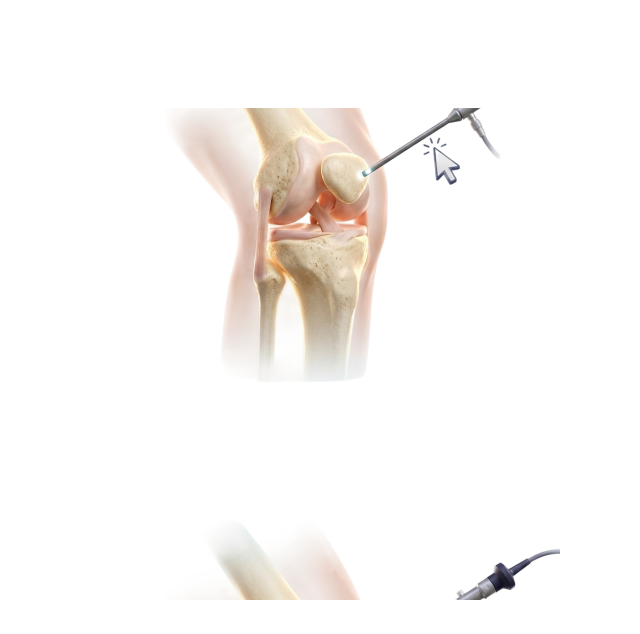
This minimally invasive approach involves inserting a tiny camera into the affected joint, providing a clear view of internal structures. Specialised instruments are then used to repair damaged tissues, remove loose fragments, reconstruct ligaments, or address other joint abnormalities.
Our experienced orthopaedic surgeons combine advanced technology with personalised treatment plans to help patients achieve improved joint function, reduced pain, and a quicker return to daily activities, work, and sports.
What is Arthroscopy?
Arthroscopy is a minimally invasive surgical procedure that allows doctors to examine, diagnose, and treat problems inside a joint using a small camera known as an arthroscope. The camera transmits high-definition images to a monitor, enabling surgeons to view the joint in detail without making large surgical incisions.
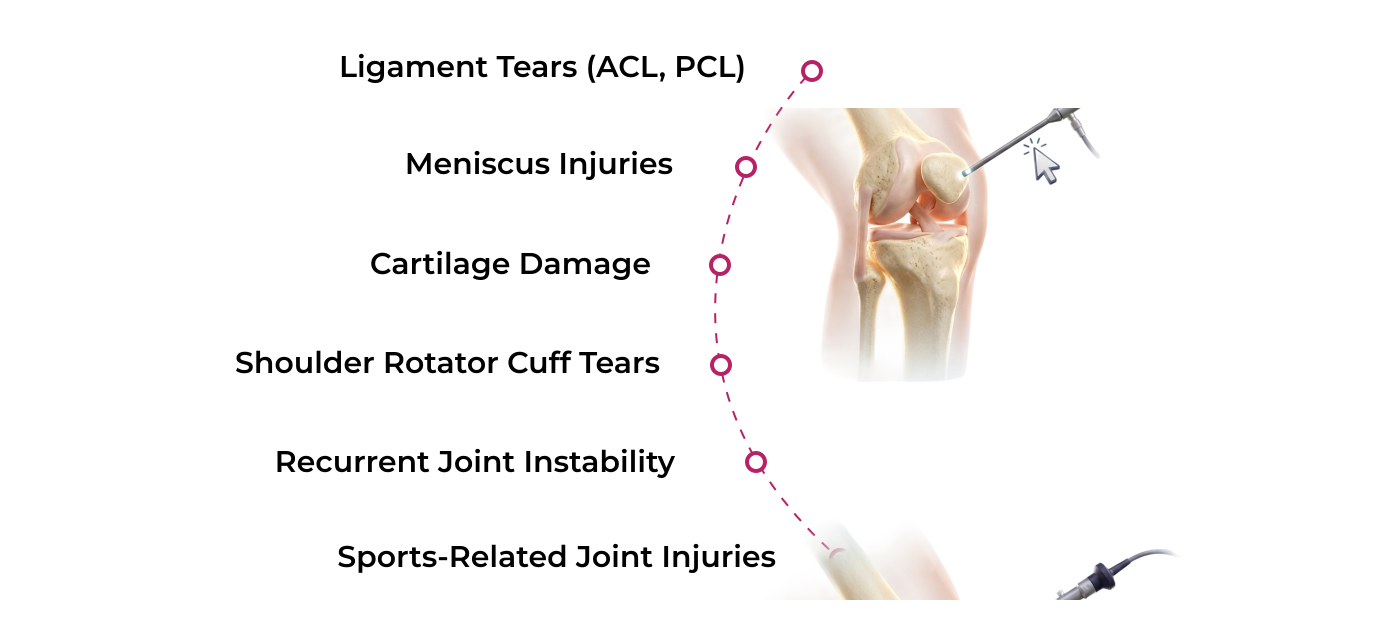
The procedure can be used for both diagnosis and treatment of various joint conditions, including ligament injuries, cartilage damage, meniscus tears, rotator cuff injuries, joint inflammation, and sports-related injuries. Arthroscopy often results in less pain, smaller scars, shorter hospital stays, and faster recovery compared to traditional open surgery.
Types of Arthroscopy
Knee Arthroscopy
Commonly performed to treat meniscus tears, ligament injuries, cartilage damage, and chronic knee pain.
Shoulder Arthroscopy
Used to manage rotator cuff tears, shoulder instability, labral injuries, frozen shoulder, and impingement syndrome.
Hip Arthroscopy
Performed to treat hip impingement, cartilage damage, labral tears, and certain causes of hip pain.
Ankle Arthroscopy
Used to diagnose and treat ankle instability, cartilage injuries, inflammation, and sports-related ankle conditions.
Elbow Arthroscopy
Helps address joint stiffness, loose bodies, cartilage damage, and chronic elbow pain.
Wrist Arthroscopy
Used for diagnosing and treating ligament injuries, wrist instability, and persistent wrist discomfort.
Conditions Treated with Arthroscopy
Arthroscopy Procedure: What Happens During Treatment?
Benefits of Arthroscopy Surgery
Arthroscopy offers several advantages over traditional open surgery and is widely used for the diagnosis and treatment of joint disorders.
- Minimally invasive surgical approach
- Smaller incisions and reduced scarring
- Less pain following surgery
- Faster recovery and rehabilitation
- Shorter hospital stay in many cases
- Improved joint function and mobility
- Reduced risk of complications
- Earlier return to work and daily activities
- Effective treatment for a wide range of joint conditions
Why Choose Ujala Cygnus Hospitals for Arthroscopy Surgery?

Experienced Orthopaedic Specialists
Our highly trained orthopaedic surgeons have extensive experience in performing advanced arthroscopic procedures across multiple joints.

Modern Arthroscopic Technology
We utilise advanced imaging systems and specialised arthroscopic equipment to deliver accurate diagnosis and precise treatment.

Personalised Treatment Plans
Every patient receives an individualised treatment and rehabilitation programme designed around their condition and recovery goals.

Comprehensive Rehabilitation Support
Our multidisciplinary team provides ongoing physiotherapy and recovery support to help patients regain strength, mobility, and confidence.
Possible Risks and Complications of Arthroscopy and How They Are Managed
While arthroscopy is generally considered safe, all surgical procedures carry certain risks. Our specialists take every precaution to minimise complications and ensure optimal outcomes.
Short-Term Risks
Infection
Although uncommon, infections may occur at the incision sites or within the joint and are managed promptly with appropriate treatment.
Swelling and Discomfort
Temporary swelling, bruising, and mild pain are common during the early recovery period.
Bleeding
Minor bleeding may occur during or after the procedure but is usually well controlled.
Blood Clots
Rarely, blood clots may develop following surgery, particularly in lower limb procedures.
Temporary Joint Stiffness
Some patients may experience stiffness that typically improves with rehabilitation exercises.
Long-Term Risks
Persistent Pain
A small number of patients may continue to experience joint discomfort despite treatment.
Recurrent Injury
Future injuries or continued joint degeneration may affect long-term outcomes.
Scar Tissue Formation
Excessive scar tissue may occasionally limit joint movement.
Joint Degeneration
Underlying arthritis or chronic joint disease may continue to progress over time.
Incomplete Symptom Relief
Some patients may experience improvement but not complete resolution of symptoms.
Managing and Reducing Risks
Thorough Medical Assessment
Careful pre-operative evaluation helps identify risk factors and optimise treatment planning.
Skilled Surgical Team
Experienced surgeons follow evidence-based techniques to improve safety and outcomes.
Structured Rehabilitation
Physiotherapy and guided exercises support recovery and help prevent complications.
Regular Follow-Up Care
Routine follow-up appointments allow early identification and management of any concerns.
Recovery and Support During Arthroscopy Rehabilitation
Recovery following arthroscopy depends on the joint treated, the complexity of the procedure, and individual healing rates. Most patients experience significant improvement within weeks to months.
Diet and Nutrition
A healthy diet rich in protein, vitamins, and minerals supports tissue repair and recovery following surgery.
Exercise and Physical Activity
Physiotherapy plays a crucial role in restoring joint strength, flexibility, balance, and overall function.
Mental Health and Emotional Wellbeing
Recovering from surgery can be challenging, and emotional support can help patients remain motivated throughout rehabilitation.
Follow-Up Care and Recovery
Regular follow-up appointments ensure proper healing, monitor progress, and help patients safely return to their normal activities.
Patient Stories
Hip Replacement by
Dr. Indranil Halder

LNICU by
Dr. Rajeev Kumar
CKD Diabetes
CKD Diabetes
Knee Replacement by
Knee Replacement
TNBC Survivor by
Dr. Abid Lone
Spine Surgery by
Dr. Saurabh Kumar Sinha
Brain Surgery by
Dr. Saurabh Kumar Sinha
Hip Replacement by
Dr. Indranil Halder
NICU by
Dr. Rajeev Kumar
CKD Diabetes
CKD Diabetes
Knee Replacement by
Knee Replacement
TNBC Survivor by
Dr. Abid Lone
Spine Surgery by
Dr. Saurabh Kumar Sinha
Brain Surgery by
Dr. Saurabh Kumar Sinha
Latest Blogs







Frequently Asked Questions
What is arthroscopy surgery used for?
Arthroscopy is used to diagnose and treat a variety of joint conditions, including ligament injuries, cartilage damage, meniscus tears, rotator cuff injuries, and sports-related joint problems.
Is arthroscopy a major surgery?
Arthroscopy is considered a minimally invasive procedure and generally involves smaller incisions, less pain, and faster recovery than traditional open surgery.
How long does recovery take after arthroscopy?
Recovery time varies depending on the joint treated and the procedure performed, but many patients can resume normal activities within a few weeks to several months.
Is arthroscopy painful?
Patients are given anaesthesia during the procedure. Mild discomfort after surgery is common but can usually be managed with medication and rehabilitation.
What are the benefits of arthroscopy?
Benefits include smaller incisions, reduced pain, quicker recovery, improved joint function, and effective treatment of many joint conditions.
Can athletes return to sports after arthroscopy?
Many athletes successfully return to sports after completing rehabilitation and receiving clearance from their orthopaedic specialist.