Powerhouse Foods to Boost Your Haemoglobin Levels Naturally
Written By
Haemoglobin (Hb) is a vital protein in red blood cells, responsible for carrying oxygen from the lungs to the rest of the body, and carrying carbon dioxide back to the lungs. In people with low low haemoglobin levels, while the underlying cause should always be properly evaluated, nutrition can play an important supportive role. Including iron-rich foods along with nutrients that help the body absorb and use iron effectively can elevate haemoglobin levels naturally. To help you make more informed choices about your diet, in this article, we’ll look at foods that can support healthy haemoglobin levels and simple ways to include them in your meals.
What is Haemoglobin and Why Does It Matter?
Haemoglobin is a protein found in red blood cells that carries oxygen from the lungs to the rest of the body. It also helps carry carbon dioxide back to the lungs, where it can be breathed out.
Adequate haemoglobin levels are important because they help ensure that tissues and organs receive enough oxygen to function normally. When haemoglobin falls below the expected range, a person may develop anaemia, which can cause:
- Tiredness
- Weakness
- Dizziness
- Breathlessness
The symptoms and their severity can vary depending on the underlying cause and how low the haemoglobin level is. A low haemoglobin result is not a diagnosis by itself, so identifying the underlying reason is important before deciding how it should be managed.
What is Considered a Normal Haemoglobin Range?
Normal haemoglobin levels can vary by age, sex and other factors. As a general reference, haemoglobin is often considered normal at around 13.8–17.2 g/dL for adult men and 12.1–15.1 g/dL for adult women. Levels below the expected range may be considered low and can indicate anaemia, depending on the individual’s circumstances.
Laboratory reference ranges may vary, so haemoglobin results should be interpreted using the range provided on the test report and in consultation with a doctor.
Common Reasons for Low Haemoglobin
Low haemoglobin can develop for several reasons, so increasing haemoglobin through diet is not always the only consideration. Some common causes include:
- Iron deficiency: Iron is needed to make haemoglobin, and inadequate intake or poor absorption can contribute to iron-deficiency anaemia.
- Vitamin B12 or folate deficiency: These vitamins are needed for healthy red blood cell production, and a deficiency can affect haemoglobin levels.
- Blood loss: Heavy menstrual bleeding, gastrointestinal bleeding or significant blood loss from an injury or procedure can lower haemoglobin.
- Chronic conditions: Long-term conditions, including chronic kidney disease and some inflammatory disorders, can affect red blood cell production.
- Other medical causes: Certain inherited blood disorders, bone marrow conditions and other health problems can also lead to low haemoglobin.
Since the underlying cause determines the appropriate treatment, persistently low haemoglobin should be assessed by a doctor rather than managed through dietary changes alone.
Foods That May Help Support Healthy Haemoglobin Levels
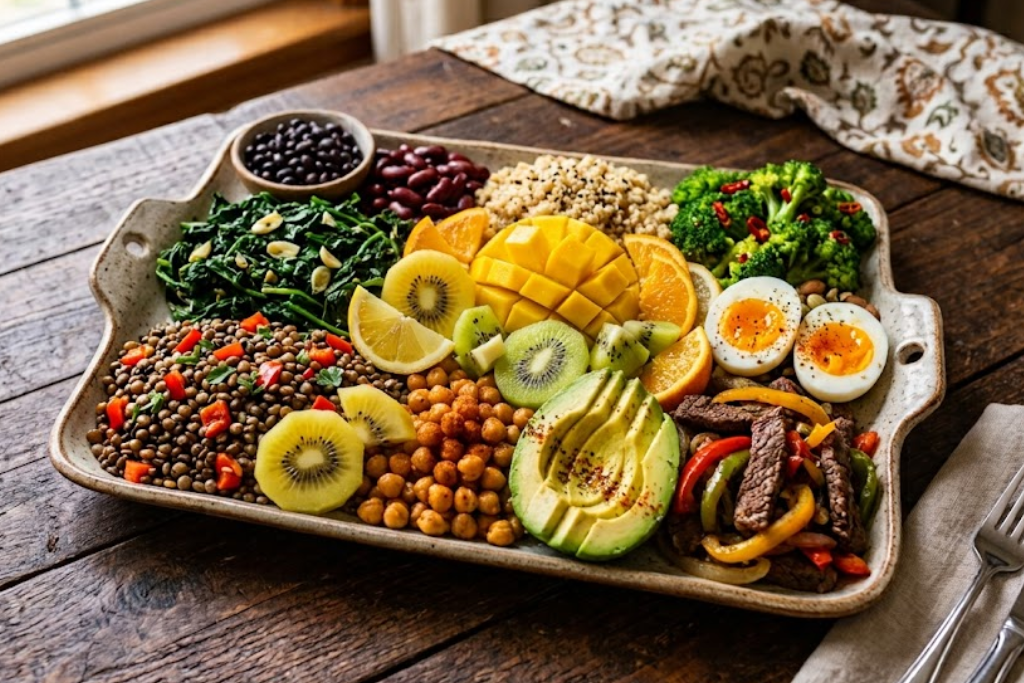
A balanced Indian diet can provide many of the nutrients needed for healthy red blood cell production. If low haemoglobin is linked to a nutritional deficiency, including a variety of iron-, vitamin B12- and folate-rich foods can help meet the body’s requirements. Vitamin C-rich foods can also support the absorption of iron from plant-based sources.
Iron-Rich Foods
Iron is an essential component of haemoglobin, making adequate dietary intake important for healthy red blood cell production. Both vegetarian and non-vegetarian Indian diets can provide good sources of iron.
- Lentils (dal)
- Chickpeas (chana)
- Kidney beans (rajma)
- Black-eyed peas (lobia)
- Soybeans and tofu
- Spinach (palak) and other leafy greens
- Sesame seeds (til)
- Pumpkin seeds
- Meat and poultry
- Fish and seafood
- Eggs
- Iron-fortified cereals
Vitamin B12-Rich Foods
Vitamin B12 is needed for healthy red blood cell production. It is naturally found mainly in animal-based foods, while fortified foods can be useful sources for people who eat little or no animal products.
- Milk
- Curd and other dairy products
- Eggs
- Fish
- Chicken
- Meat
- B12-fortified breakfast cereals
- B12-fortified plant-based milk
Folate-Rich Foods
Folate supports the formation of healthy red blood cells and is found in many commonly eaten Indian foods, particularly leafy vegetables and legumes.
- Spinach (palak)
- Fenugreek leaves (methi)
- Amaranth leaves (chaulai)
- Mustard greens (sarson)
- Lentils (dal)
- Chickpeas (chana)
- Green peas
- Okra (bhindi)
- Avocado
- Fortified cereals
Vitamin C-Rich Foods
Vitamin C helps the body absorb non-haem iron from plant-based foods. Adding a vitamin C-rich fruit or vegetable to an iron-rich meal can therefore support iron absorption.
- Amla
- Guava
- Oranges and other citrus fruits
- Lemon
- Kiwi
- Tomatoes
- Capsicum
- Green chillies
- Papaya
How to Improve Iron Absorption from Food
Getting enough iron from food is only part of the picture. The body also needs to absorb iron effectively, particularly the non-haem iron found in plant-based foods. A few simple dietary habits can help improve iron absorption.
- Pair iron-rich foods with vitamin C: Add lemon to dal or chana, or include amla, guava, tomatoes or other vitamin C-rich foods with meals containing plant-based sources of iron.
- Keep tea and coffee away from iron-rich meals: Tea and coffee contain compounds that can reduce the absorption of non-haem iron when consumed with meals. Consider having them between meals instead.
- Include a variety of iron sources: Combining different plant-based and animal-based sources, where appropriate, can help provide iron as part of a balanced diet.
If low haemoglobin persists despite adequate dietary intake, poor iron absorption or a gastrointestinal cause may need to be considered. A gastroenterologist at Ujala Cygnus can assess whether an underlying digestive condition may be affecting nutrient absorption or contributing to blood loss and recommend appropriate evaluation.
When Dietary Changes May Not Be Enough
Dietary changes may not be enough to correct low haemoglobin when the underlying problem is not related to diet alone. This may be the case when:
- There is ongoing blood loss, such as heavy menstrual bleeding or bleeding from the digestive tract.
- The body cannot absorb nutrients properly, which can occur with certain digestive conditions.
- Low haemoglobin is linked to a chronic health condition, such as chronic kidney disease or certain inflammatory disorders.
- The deficiency is significant, and dietary sources alone may not provide enough of the required nutrient to restore levels.
- The cause is unrelated to a nutritional deficiency, such as certain inherited blood disorders or other medical conditions.
In these situations, simply adding more iron-rich or nutrient-rich foods may not address the underlying problem. Medical evaluation is important to determine the cause and whether additional treatment is needed.
When Should You Consult a General Physician for Low Haemoglobin?
Persistent or unexplained low levels of haemoglobin should be medically evaluated. Consulting a physician can help identify the underlying cause and determine whether dietary changes alone are appropriate.
Consider seeking medical advice in the following cases:
- Persistent tiredness or weakness
- Dizziness or frequent headaches
- Breathlessness, particularly during routine activities
- Pale skin or unusual paleness
- A repeatedly low haemoglobin result
- Symptoms that are persistent, worsening or affecting daily activities
Seek prompt medical attention if you develop severe breathlessness, chest pain, fainting, confusion or significant weakness, as these symptoms may require urgent assessment.
How Ujala Cygnus Can Help
At Ujala Cygnus, our General and Internal Medicine team provides care for patients with concerns such as low haemoglobin and unexplained changes in blood counts. Our doctors review your symptoms, medical history and test results to help identify the possible cause. Based on your health needs, they may recommend relevant blood tests or a health checkup and, where appropriate, guide you to a specialist such as a gastroenterologist or endocrinologist for further evaluation.
If you have persistently low haemoglobin or concerning symptoms, consult our General and Internal Medicine team at a Ujala Cygnus hospital. To schedule a consultation, call 9146691466 or book an appointment online at your convenience.
FAQs
What are the best foods to support healthy haemoglobin levels naturally?
Foods rich in iron, vitamin B12 and folate can support healthy red blood cell production. Depending on dietary preferences, options include lentils, chickpeas, leafy greens, eggs, dairy products, fish, meat and fortified cereals.
How can you support haemoglobin levels through your daily diet?
Include a varied diet with sources of iron, vitamin B12 and folate, and pair plant-based iron sources with vitamin C-rich foods to support iron absorption. Consistency and dietary variety are more useful than relying on a single food.
What fruits and vegetables are good sources of nutrients that support haemoglobin?
Leafy greens such as spinach and methi provide folate and some iron, while foods such as lentils and beans provide plant-based iron. Fruits such as amla, guava and oranges are rich in vitamin C, which can help the body absorb non-haem iron from plant foods.
Can vitamin C-rich foods help improve iron absorption?
Yes. Vitamin C can improve the absorption of non-haem iron, which is mainly found in plant-based foods. Adding foods such as lemon, amla, guava, oranges or tomatoes to meals containing plant-based sources of iron can therefore be helpful.
How long does it take to increase haemoglobin with a healthy diet?
The time varies depending on the cause and severity of low haemoglobin and whether treatment is also required. If a nutritional deficiency is responsible, dietary changes may support improvement, but significant deficiency may require supplements or other treatment recommended by a doctor.
What foods should you limit around iron-rich meals if you have low haemoglobin?
Tea and coffee can reduce the absorption of non-haem iron when consumed with meals. Having them between meals rather than alongside iron-rich foods may help improve iron absorption.
Can low haemoglobin be caused by something other than iron deficiency?
Yes. Low haemoglobin can also be associated with vitamin B12 or folate deficiency, blood loss, chronic diseases, inflammation and certain inherited or other medical conditions. Identifying the underlying cause is important because treatment depends on it.
When should you get a haemoglobin or blood test for low haemoglobin?
A doctor may recommend a haemoglobin or complete blood count when symptoms such as persistent tiredness, weakness, dizziness, breathlessness or unusual paleness are present, or when there are risk factors or concerns about anaemia. Further tests may be advised depending on the initial findings.
Can diet alone correct a significantly low haemoglobin level?
Not always. Diet may help when a nutritional deficiency contributes to low haemoglobin, but significantly low levels or cases caused by blood loss, chronic disease or another medical condition may require further investigation and specific treatment.
When should you consult a doctor for persistently low haemoglobin?
You should consult a doctor if haemoglobin remains low on repeated tests, symptoms persist or worsen, or the cause of the low level is unclear. A doctor can assess the results and recommend appropriate investigations or treatment.
Where can I get treatment for low haemoglobin?
When low haemoglobin persists or is accompanied by symptoms such as fatigue, weakness or breathlessness, medical evaluation can help identify the underlying cause and guide treatment. Patients can consult the General and Internal Medicine team at Ujala Cygnus for assessment, appropriate investigations and further management. Depending on the suspected cause, a doctor may also recommend consultation with a specialist such as a gastroenterologist or endocrinologist. For consultation, book an appointment or call 9146691466.
Dr. Umesh Sharma
Senior Consultant
Internal Medicine
MBBS, MD (Internal Medicine)
Ujala Cygnus JK Medicity Hospital, Jammu, Jammu & Kashmir


+91-91466 91466
If you want to get a free consultation without any obligations, fill in the form below and we'll get in touch with you.
Request a Call Back
Our healthcare expert will contact you shortly to understand your requirements and assist you with the right care.
100% Confidential
Your information is safe and secure with us.
Quick Response
Our team will connect with you at the earliest.
Expert Guidance
Speak with our experienced healthcare professionals.
Request a Call Back
You Will Get a call within 1 hour
Your information is
safe & confidential.