While preparing for surgery, it is natural for you to have questions about how anaesthesia will be administered. How will pain be managed? What can be expected during recovery? However, you do not have to navigate these concerns alone. At Ujala Cygnus Hospitals, Delhi, we understand these concerns and provide specialised anaesthesiology services supported by an experienced team of anaesthesiologists, modern operation theatres, advanced monitoring systems and critical care facilities. Our anaesthesiologists provide care for patients undergoing procedures ranging from minor surgeries to complex, high-risk operations, planning appropriate anaesthesia according to individual medical needs. Modern monitoring systems help the team track vital signs during surgery, while critical care facilities are available for patients who require closer observation after the procedure. As part of an NABH-accredited hospital chain, we are committed to delivering quality healthcare with a focus on patient safety at every stage of surgical care.
Our Anaesthesiology in Delhi

Anaesthesiology Services at Ujala Cygnus, Delhi
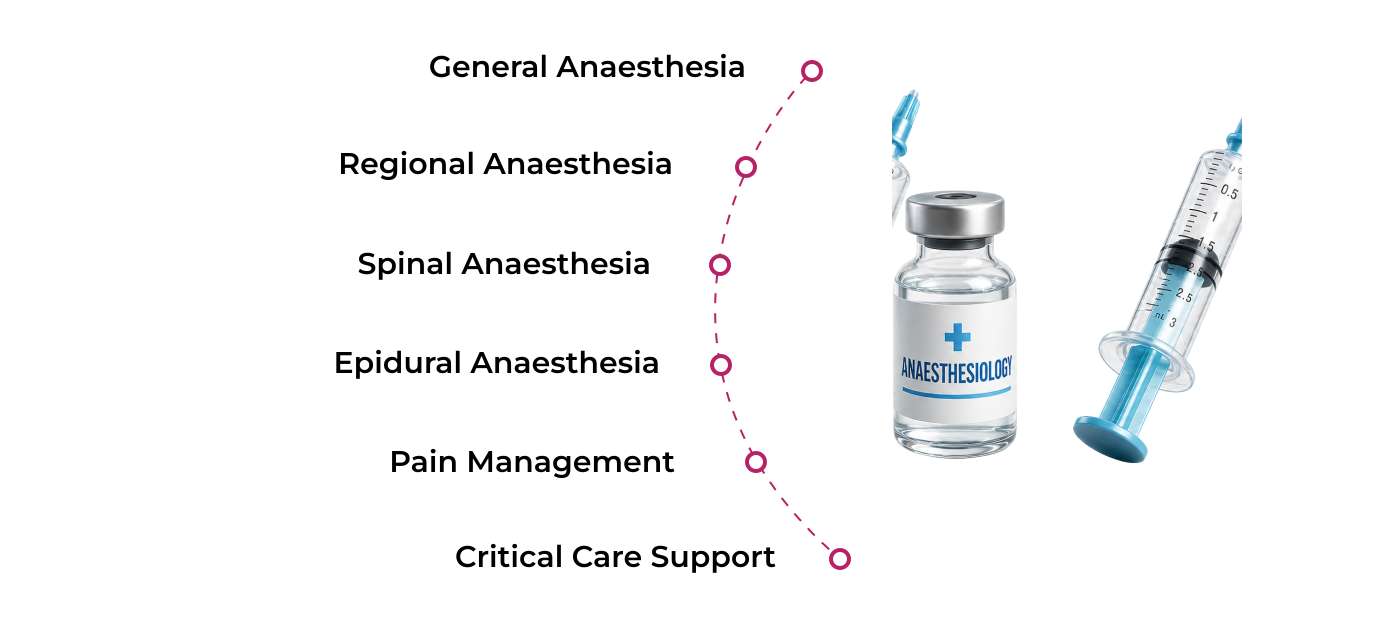
At Ujala Cygnus in Delhi, our anaesthesiology services include the following types of anaesthesia and related care services:
- General anaesthesia: Produces a controlled state of unconsciousness during surgery, with close monitoring of vital functions.
- Regional anaesthesia: Blocks sensation in a specific region of the body and may be used alone or alongside general anaesthesia, depending on the procedure.
- Spinal anaesthesia: Delivers anaesthetic medication into the fluid surrounding the spinal cord to numb the lower part of the body for suitable procedures.
- Epidural anaesthesia: Delivers anaesthetic medication into the epidural space to provide pain relief or anaesthesia, depending on the clinical need.
- Sedation: Helps patients relax or become drowsy during selected procedures, with the level of sedation determined by the procedure and the patient's needs.
- Post-operative pain management: Uses appropriate pain-relief methods to manage discomfort after surgery and support recovery.
The choice of anaesthesia varies according to the procedure, the patient's health and the anaesthesiologist's clinical judgement. Our team explains the proposed approach and considers relevant medical conditions, previous anaesthesia experiences and individual concerns when planning care.
Anaesthesia Care Before, During and After Surgery
Anaesthesiology involves more than administering anaesthesia in the operating theatre. It includes assessing the patient's health before surgery, monitoring vital functions during the procedure and supporting recovery afterwards. At Ujala Cygnus, Delhi, our anaesthesiology team coordinates these stages with the surgical team to address individual clinical needs.
Before Surgery
Before a planned procedure, the anaesthesiologist conducts a pre-anaesthetic assessment to understand the patient's health and identify factors that may affect anaesthesia. This typically involves reviewing medical history, current medications, allergies, previous anaesthesia experiences and airway status. The team also considers existing conditions, including heart or lung disease, diabetes and other illnesses where relevant.
Depending on the patient's condition and the planned surgery, the assessment may include blood tests, cardiac evaluation or pulmonary function tests. These investigations are recommended according to clinical need rather than routinely for every patient.
The anaesthesiologist uses this information to determine an appropriate anaesthesia plan, discuss potential risks and explain the preparation required before surgery. Patients also receive guidance on fasting, medication use and other pre-operative instructions specific to their procedure. Patients should discuss their regular medicines with the treating team rather than stop or alter them independently.
During Surgery
During surgery, the anaesthesiologist administers the planned anaesthesia and monitors the patient's response. Monitoring may include heart rate, blood pressure, oxygen levels, breathing and other parameters relevant to the procedure and the patient's condition.
The team adjusts anaesthesia and supportive care as needed throughout the operation. This helps manage changes in vital functions, maintain the intended level of anaesthesia and respond promptly to clinical concerns. Coordination between the anaesthesiologist and the surgical team supports patient management throughout the procedure.
The type of anaesthesia and the level of monitoring depend on the nature and duration of surgery, the patient's medical condition and the anticipated clinical requirements.
After Surgery
After the procedure, patients move to an appropriate recovery area, where the care team monitors their breathing, consciousness, vital signs and response to anaesthesia. The duration and level of monitoring depend on the anaesthetic technique, the procedure and the patient's condition.
Our anaesthesiology team also supports post-operative pain management. Depending on the procedure and clinical needs, pain relief may involve prescribed medicines or other appropriate techniques. The team may also address concerns such as nausea or vomiting after anaesthesia and assess whether further monitoring or critical care support is needed.
Recovery varies from patient to patient. The treating team provides guidance on pain relief, observation and the next steps in care according to the patient's progress and clinical requirements.
Why Choose Ujala Cygnus Hospitals, Delhi for Anaesthesiology Care?
Anaesthesiology requires careful clinical planning, appropriate monitoring and access to relevant hospital services. At Ujala Cygnus in Delhi, our anaesthesiology team works closely with the surgical team to support patients through appropriate clinical planning, monitoring and post-operative care. Here are some key aspects of our anaesthesiology care:
Individualised Anaesthesia Planning
Each patient's health, medical history and planned procedure inform anaesthesia decisions. Our specialists consider relevant risk factors, previous anaesthesia experiences and clinical requirements when deciding on the appropriate technique and monitoring plan.
Coordinated Surgical Care
Anaesthesiologists work alongside surgeons and other relevant specialists to plan and manage care throughout the surgical journey. This coordination helps address changing clinical needs and supports continuity between the operating theatre and post-operative recovery.
Surgical and Monitoring Infrastructure
Our modular operation theatres, diagnostic facilities and patient-monitoring systems support surgical care. These facilities enable our anaesthesiology and surgical teams to monitor patients during procedures and provide appropriate care based on their clinical needs.
Emergency and Critical Care Support
Access to emergency and critical care facilities is important when patients need closer observation or additional medical support. Ujala Cygnus Hospitals, Delhi, provides emergency and critical care services to patients with more complex clinical needs. The level of support required depends on each patient's condition and the treating team's assessment.
Care Closer to Home
As North India's largest NABH-accredited hospital chain, Ujala Cygnus is committed to providing quality, affordable healthcare. With a presence across Tier 2 and Tier 3 cities, including Delhi, we help patients access a range of hospital services closer to home.
Latest Blogs









Frequently Asked Questions
What services are provided by an anaesthesiology hospital?
When should a patient consult an anaesthesiologist before surgery?
Patients meet an anaesthesiologist as part of their pre-operative preparation, according to the treating team’s advice and the planned procedure. An earlier assessment may be needed for patients with existing medical conditions, previous reactions to anaesthesia or complex surgical requirements.
What are the different types of anaesthesia used during surgical procedures?
The main types include general anaesthesia, regional anaesthesia, spinal anaesthesia, epidural anaesthesia and sedation. General anaesthesia causes temporary unconsciousness, while regional and spinal techniques block sensation in specific parts of the body. Epidural anaesthesia can provide anaesthesia or pain relief, while sedation helps patients relax or become drowsy. The anaesthesiologist recommends an appropriate technique based on the procedure and the patient’s health.
What happens during a pre-anaesthesia assessment?
During a pre-anaesthesia assessment, the anaesthesiologist reviews the patient’s medical history, existing conditions, current medications, allergies and previous experiences with anaesthesia. The assessment may also include an examination of the airway and other relevant physical checks. Based on these findings, the specialist plans the appropriate anaesthesia, identifies potential risks and explains the preparation required before surgery.
Is anaesthesia safe for patients with diabetes, high blood pressure or heart problems?
Many patients with diabetes, high blood pressure or heart conditions can undergo anaesthesia, but the risks vary depending on the condition, how well it is controlled and the type of surgery. Before the procedure, the anaesthesiologist reviews the patient’s medical history, current medications and overall health to plan appropriate care. Additional tests, changes to medication or closer monitoring may be needed. Patients should not stop or change prescribed medicines without advice from the treating team.
Does Ujala Cygnus provide anaesthesia services at its hospitals for patients in Delhi?
Yes. Ujala Cygnus lists anaesthesiology among its medical specialities and has anaesthesiology specialists listed at Central Hospital, Delhi. Patients should confirm the availability of specific services and current appointment schedules with their preferred Delhi hospital.
How can patients book a consultation with an anaesthesiologist at Ujala Cygnus?
Patients can submit an appointment request through the official Ujala Cygnus appointment page or call +91 91466 91466. Our team will confirm appointment availability and explain whether the anaesthesiology consultation should be arranged through the surgical team before the planned procedure.
Can patients get a pre-anaesthesia assessment at Ujala Cygnus before surgery?
Yes. Pre-anaesthetic assessment is part of the anaesthesiology services at Ujala Cygnus. Patients scheduled for surgery can enquire about an assessment with our anaesthesiology team. Our team will advise you on scheduling, the relevant medical records to bring and any investigations required before the procedure.